
"coffee farm funding"
900 article(s) found

Is the hybrid between Arabica and Luodou fine coffee? what does the market think of hybrid coffee?
Changing weather patterns, pests, deforestation and rising temperatures are just some of the environmental factors that threaten global coffee production. It is estimated that by 2050, we may lose as much as 40% of our arable land to grow coffee, making today's coffee industry face unprecedented challenges. One possible solution to the above problems is to switch to new hybrids, these products

The Flavor characteristics of Historical stories about the cultivation of Narino Na Linglong Coffee in Colombia
For more information on coffee beans, please follow the Coffee Workshop (official Wechat account cafe_style) the coffee-producing area of Colombia is located in the foothills of the Andes, where the climate is mild and the air is humid. Colombia has three Cordilleras mountains (sub-mountain system) running north and south, right into the Andes. Along these mountains

Coffee farms in Guatemala Coffee Bean Plantation
The Guatemalan Coffee Garden at the foot of the volcano Father Jesuit introduced coffee trees to Guatemala in 1750, where German colonists developed the coffee industry at the end of the 19th century. Today, most of the coffee industry's production takes place in the south of the country. Here, the slopes of the Sierra Madre volcano provide ideal conditions for growing high-quality coffee beans, at a high altitude

Introduction to the planting environment of Kenyan boutique coffee bean manor with delicious and slightly alcoholic aroma
There are two types of coffee farms in Kenya. One is a large plantation that covers an area of more than five acres, but the average elevation is low. In the case of Kenyan coffee, the coffee beans of the large farms are of medium quality. The best Kenyan beans come from small farms, most of which are located in the foothills or volcanic slopes above 5,000 to 6,000 feet. Each small farmer has a capacity of only 20 to 70 bags per season.

Rwandan coffee beans characteristic flavor "grass aroma" you did not know the Rwandan coffee producing area so
Professional coffee knowledge exchange More coffee bean information Please pay attention to coffee workshop (Weixin Official Accounts cafe_style) Rwanda coffee African coffee always gives people a wild and unrestrained impression, but Rwandan coffee is so soft, fragrant, saturated particles, this is my first impression of Rwandan coffee, as far as Africa is concerned. Rwanda's coffee industry

Burundian coffee bean flavor taste manor characteristics story Burundian coffee boutique coffee introduction
The East African newspaper reported on the 8th that in order to help Burundi integrate into the world coffee market as soon as possible, Starbucks has funded officials of the Burundian Coffee Management Commission to study abroad, and Starbucks executives will also visit Burundi this month to discuss cooperation with relevant parties. Coffee is the most important export industry in Burundi. Starbucks will launch Burundian coffee in its chain stores.

The cooperative farm United by Kenyan coffee farmers is different from the autonomy of other large farms.
Kenya is bordered to the north by Ethiopia, the origin of Arabica coffee trees, but it was not until the beginning of the 20th century that coffee cultivation began. In the 19th century, missionaries introduced Arabica trees from Yemen, but did not plant them in large quantities. It was not until 1893 that coffee was cultivated on a large scale after the introduction of Brazil's ancient bourbon seeds. That is to say, Kenyan coffee was of Brazilian origin.
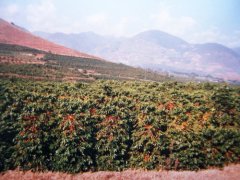
Yunnan Lujiang Coffee Farm
Lujiang Farm is located in the west of Yunnan Province, 24952515 north latitude and 98839888 east longitude. The altitude is 6801000 meters. Under the jurisdiction of Longyang District, Baoshan City, adjacent to Lujiang Town and Mangkuan Dai and Yi Township, 542km east to Kunming, capital of Yunnan Province, 120km west to Myanmar Banwa, highway through farm to Kunming, national secondary highway directly to Myitkyina of Myanmar, transportation is very convenient, air

Ethiopia, the coffee bean producing area of Kenya, which is grown on volcanic slopes.
Kenya is bordered to the north by Ethiopia, the origin of Arabica coffee trees, but it was not until the beginning of the 20th century that coffee cultivation began. In the 19th century, missionaries introduced Arabica trees from the leaves, but did not plant them in large quantities. It was not until 1893 that coffee was cultivated on a large scale because of the introduction of Brazil's ancient bourbon seeds. That is to say, Kenyan coffee is of Brazilian origin.

Can coffee be relieved at coffee farms in Kenya?
Kenya is bordered to the north by Ethiopia, the origin of Arabica coffee trees, but it was not until the beginning of the 20th century that coffee cultivation began. In the 19th century, missionaries introduced Arabica trees from the leaves, but did not plant them in large quantities. It was not until 1893 that coffee was cultivated on a large scale because of the introduction of Brazil's ancient bourbon seeds. That is to say, Kenyan coffee is of Brazilian origin, because of water.

Introduction to the characteristics of Kenyan Coffee Flavor and Taste varieties
There are two types of coffee farms in Kenya. One is a large plantation that covers an area of more than five acres, but the average elevation is low. In the case of Kenyan coffee, the coffee beans of the large farms are of medium quality. The best Kenyan beans come from small farms, most of which are located in the foothills or volcanic slopes above 5,000 to 6,000 feet. Each small farmer has a production capacity of only 20 to 70 bags per season.

Panamanian Jensen Manor Rose Summer Flavor Flavor Coffee Bean Flavor description
Professional barista communication please follow coffee workshop (Wechat official account cafe_style) Coffee production area: Volcan Annual rainfall: 3000 mm grading Standard: SHB Coffee Variety: Geisha Annual temperature: about 20 degrees C treatment: sun treatment method Bean Specification: 17-18 mesh planting altitude: about 1750m soil types: volcanic soil harvesting method: manual harvesting Panama Jensen
Is Jamaican Blue Mountain Coffee beans a boutique coffee? Introduction to the characteristics and Flavor of the Blue Mountain Coffee producing area in Jamaica
When it comes to Blue Mountain Coffee in Jamaica, the most famous farm is WallenfordEstate. Here, we introduce coffee fans to another more advanced old inn farm (OldTavernEstate). The 68-year-old owner AlexTwyman was born.
China Coffee Farm Lujiang Coffee Farm in Yunnan
Lujiang Farm is located in the west of Yunnan Province, 24952515 north latitude and 98839888 east longitude. The altitude is 6801000 meters. Under the jurisdiction of Longyang District, Baoshan City, adjacent to Lujiang Town and Mangkuan Dai and Yi Township, 542km east to Kunming, capital of Yunnan Province, 120km west to Myanmar Banwa, highway through farm to Kunming, national secondary highway directly to Myitkyina of Myanmar, transportation is very convenient, air

Boutique Coffee Coffee Certification Organization of Coffee planting Industry
Fair Trade Coffee Fair Trade Coffee Fair Trade is one of the many coffee certifications and the most widely used international third-party certification. Certified coffee beans usually sell at a higher price. In Europe and the United States, the main circulation channels will set up special shelves of Fairtrade products for consumers to choose from. As the name implies, fair trade emphasizes the public.

El Salvador Coffee Bean
El Salvador is one of the small countries in Central America, where coffee is light, aromatic, pure, slightly acidic, and the flavor characteristics are excellent balance, which is a specialty of Central America. It has sour, bitter and sweet taste characteristics, and the best baking degree is moderate and deep. In the early 1990s, guerrilla warfare greatly damaged the country's national economy, reducing coffee production from 70 years.

What are the flavor and taste characteristics of Rwanda boutique coffee Musasha du Kende Kawa Cooperative?
Professional coffee knowledge exchange more coffee bean information please follow the coffee workshop (Wechat official account cafe_style) Rwanda boutique coffee Musa du Kende Kawa Cooperative what are the flavor and taste characteristics? How is the planting environment? National Rwanda (Rwanda) 1500 2000 meters above sea level Bourbon producer du Ken de Kawa Cooperative treatment Water washing is located in Lu

Panamanian Coffee | brief introduction of Coffee treated with Honey from Reese Manor after Pokaide Losla
Panamanian Pokaide Los La Reese Manor Honey treatment production area: Panana Boquete / Los Lajones/ Eastern slopes of Volcan Baru planting altitude: about 1750mm 2100m soil species: volcanic soil treatment: honey treatment average annual temperature / rainfall: 3500 mm flavor: flower and berry aroma, flavor changes, honey-like oily feeling, toffee
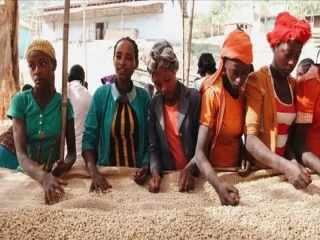
Ethiopian coffee beans | Waka cooperative boutique coffee bean flavor description _ what is the cooperative coffee bean production mode?
Coffee cultivation in Ethiopia is generally based on small farmers' workshops, and the output quality is often affected by unfavorable factors such as technology, capital, labor force and lack of market promotion platform in the process of production. When many coffee farms with their own characteristics cooperate in joint production, they develop together by learning from each other's strong points to offset their weaknesses.

Panamanian Honey Coffee | Panama BOP | Los Lajones Estate Manor
Professional coffee knowledge exchange more coffee bean information please follow the coffee workshop (Wechat official account cafe_style) front street coffee Panamanian coffee bean recommendation | Panamanian Flower Butterfly | Emerald Manor Blue Standard Central American Panama Panama is very much to look forward to the country Panama's best coffee Best of Panama cup competition has attracted global attention except coffee itself.